


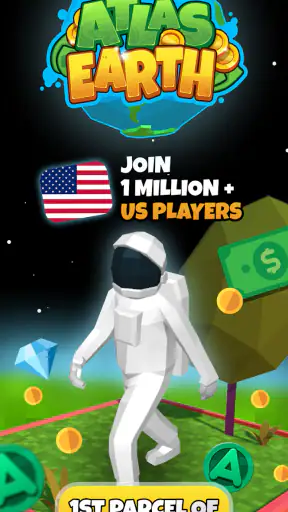

I approached ATLAS:EARTH as a finance app with a game layered over the top, and that distinction matters. It is not a budgeting tool, a banking replacement, or a conventional cashback wallet. Instead, it turns digital land ownership into the central activity: I collect virtual parcels, receive rent from them, and look for ways to earn cashback while continuing to play. My overall view is positive, but only for people who enjoy slow, location-based progress and can treat the rewards as a bonus rather than dependable income.
The idea is easy to understand, yet the experience takes patience. Atlas Reality, Inc. has built something that sits between a casual collection game and a rewards app. The financial language may attract people who normally ignore games, while the map-based collecting gives finance-minded users a more playful reason to return. That combination is the app’s strongest quality, but it also creates its biggest expectation problem: the fun is immediate, while meaningful returns require time, attention, and sensible spending.
How the digital land and cashback loop works
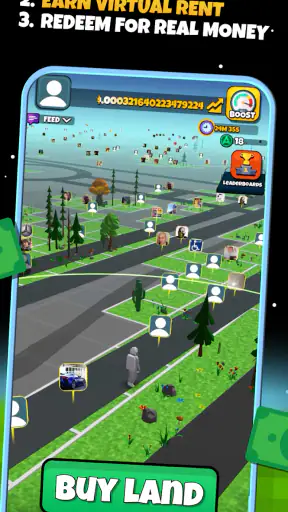
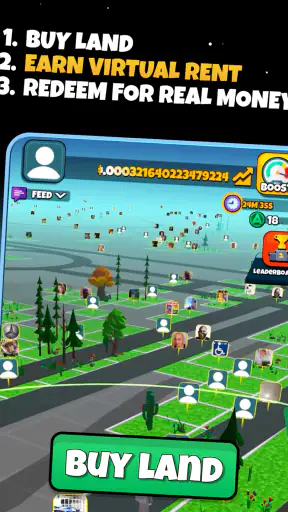
The main loop begins with exploring a map and claiming digital land. Each parcel becomes part of my virtual portfolio, and ownership is tied to rent collection. That makes progress feel more tangible than a standard points system because I am building a visible collection rather than simply watching an anonymous balance increase.
I found the map useful as a reason to check places I already visit. A commute, a walk through a shopping area, or a trip to a different neighborhood can become an opportunity to see available land and expand the collection. The important practical detail is that this is not a game I would play effectively by opening it once and expecting instant results. Its design rewards a routine: check in when I am already out, collect what is available, and avoid turning every ordinary errand into a hunt for virtual property.
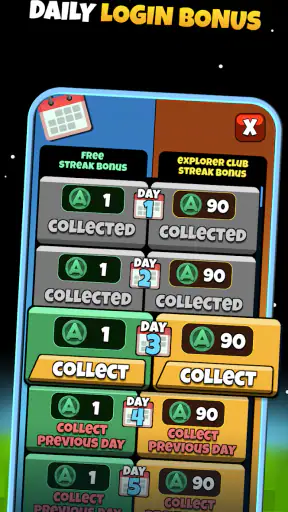
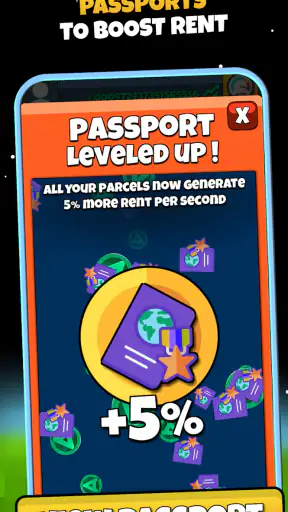
Rent gives the app its long-term shape. Instead of treating every session as a separate challenge, the system encourages me to think about accumulation. A small parcel may not feel important by itself, but several parcels can make the collection more satisfying and give each return visit a purpose. I like that the app provides a sense of ownership without asking me to manage real property, though the virtual nature of that ownership also means I need to keep my expectations grounded.
Cashback adds another reason to remain engaged. In practice, I see the app as having two related but different motivations: collecting land for the game and using eligible opportunities for rewards. Those goals can overlap, but they should not be confused. Someone looking for the simplest possible cashback experience may find the map and collection mechanics unnecessary. Someone who enjoys games but wants a little real-world value attached to play may find the combination much more appealing.
The free entry point is helpful. I can try the core experience without paying upfront, which makes it easier to decide whether the map-based format suits me. There are in-app purchases ranging from $1.99 to $399.99 per item, so I would be careful before spending. The presence of expensive purchase options changes the way I evaluate progress: I would first learn the earning and collection rhythm, then decide whether any purchase genuinely improves my enjoyment rather than buying simply because a larger portfolio looks attractive.
What feels strongest after regular use
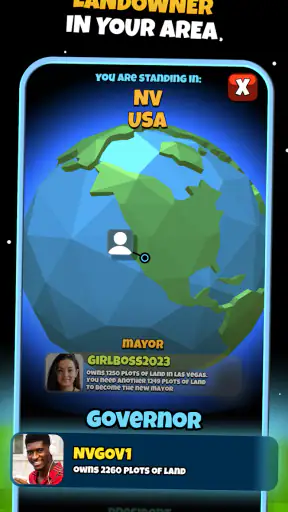
The best part is the way the app gives ordinary locations a second layer. A familiar street can become a place where I have something to collect, protect, or revisit. That is more engaging than a passive rewards app, where I usually complete a task and forget about it. Here, the map creates a personal history. My collection reflects where I have been, even though the land itself is digital.
That design also makes the app more social in spirit without requiring me to treat it like a competitive multiplayer game. I can compare the idea of owning parcels with friends, discuss useful places to check, or simply enjoy the novelty of seeing a neighborhood represented as a collection. The experience works best when I let it accompany my day instead of allowing it to dictate my day.
Another strength is the low barrier to experimentation. The app is free, belongs to the finance category, and is rated for mature users aged 17 and over. That combination tells me it is positioned as a rewards-focused product rather than a children’s collecting game. I would still read the purchase and reward details carefully before committing money, but I can begin by learning the interface and deciding whether the system is worth my time.
The audience response is also encouraging. It holds an average rating of 4.3 from roughly 298 thousand ratings, with about 26 thousand written reviews, and it has passed 5 million installs. Those figures do not prove that I will enjoy it, but they do suggest that the concept has found a substantial audience. I interpret that as evidence that the blend of digital property and rewards is more than a novelty for a small group of players.
In everyday use, I would approach it like this: I open it while walking to a café, inspect the nearby map, collect a parcel if one is available, and then leave it alone rather than circling the area repeatedly. Later, I return when I am already in another part of town. This workflow keeps the game from becoming a chore and prevents transport costs or wasted time from overwhelming any potential benefit. The smartest habit is to fit the app around trips I already planned, not plan trips around the app.
Three practical habits that improve the experience
- Use natural travel as your map strategy. New areas are most useful when I encounter them during normal shopping, commuting, or walking. Making a special journey solely to collect virtual land can erase the value of a small reward.
- Separate entertainment spending from expected earnings. I would treat every purchase as a game expense, not as an investment guaranteed to pay itself back. This is especially important because the available purchase range reaches far beyond the cost of a casual mobile game.
- Build a collection slowly before forming a routine. A short trial period helps me learn whether collecting, rent, and cashback are all enjoyable together. If only one part appeals to me, I can decide whether the app still deserves space on my phone.
These habits reveal an important trade-off. The app can make routine movement more interesting, but it does not remove the usual costs of time, travel, or attention. The reward is strongest when the app adds value to something I was going to do anyway. It becomes much weaker when I chase tiny gains through extra effort.
Where the experience becomes less convincing
The central weakness is the gap between the language of earning and the patience required to see satisfying progress. “Earn” can sound immediate, but a collection-based system naturally favors gradual accumulation. I would not install this expecting a quick way to cover bills or replace a conventional cashback service. The right mindset is closer to collecting with a financial side benefit.
The map can also make the experience feel dependent on location. If I spend most of my time in places with limited opportunities, the collecting loop may feel slow. That is not necessarily a flaw in the concept, but it does mean the app’s appeal varies from person to person. Someone who moves around a busy area may find frequent reasons to return, while someone with a predictable routine may run out of interesting activity quickly.
There is also a potential tension between the free starting point and the purchase system. Free access lets me test the idea, but visible opportunities to buy more can make normal progress feel less exciting if I compare myself with players who spend heavily. I prefer to keep a firm personal limit and judge the app by the enjoyment it provides without assuming that spending more automatically creates better value.
The finance label deserves a little caution as well. This is not the same kind of financial tool as a banking app, expense tracker, investment platform, or tax organizer. It does not replace those products because its goal is entertainment connected to digital rewards. If I need precise control over household money, I would choose a dedicated finance app instead. Atlas Reality, Inc. has made a hybrid product, and it is best judged on that basis.
The mature age rating is another reason I would explain the app clearly before recommending it to a younger user. The presence of rewards and purchases can make financial expectations more complicated than in a basic arcade game. I would want a new player to understand that virtual land is part of the app’s game system and that cashback should be approached carefully, with attention to the app’s own conditions and the user’s spending choices.
How it compares with ordinary alternatives
Compared with a standard cashback app, this one is more playful and more location-focused. A conventional cashback service usually asks me to shop through selected offers or complete straightforward actions, then treats the reward balance as the main event. ATLAS:EARTH gives me a persistent collection and a reason to revisit the map. That makes it more memorable, but also less direct. If I want the least complicated route from an eligible purchase to a reward, the conventional option may be better.
Compared with a location-based collecting game, the financial angle is the differentiator. A normal collecting game may offer badges, levels, or digital items with no real-world reward connection. Here, rent and cashback make the collection feel more purposeful. The trade-off is that I may think more about value and return, which can take some of the carefree feeling out of play.
Compared with a personal finance app, the difference is even clearer. Budgeting software helps me understand spending, while this app encourages me to engage with a virtual economy. I would use them for completely different jobs. The two could coexist, but I would never rely on this app for financial planning or use its reward mechanics as a substitute for saving money.
Who will enjoy it most
I think it is a good fit for someone who likes map-based games, enjoys collecting digital assets, and already travels through different neighborhoods. It is particularly suitable for a patient player who likes checking gradual progress rather than demanding a large payoff from every session. The free starting point makes it practical to test, provided the user treats purchases as optional entertainment.
It may also suit a person who normally ignores finance apps because they feel dry or administrative. The land collection gives the reward process a visual identity and a small sense of discovery. For that audience, the app’s game layer is not a distraction; it is the reason the financial side becomes interesting enough to revisit.
I would recommend skipping it if the main goal is reliable income, instant cashback, or detailed money management. It is also a poor match for anyone who dislikes location-based mechanics, has no interest in collecting, or tends to spend impulsively when a game offers upgrades. In those cases, a simple cashback service or a proper budgeting tool would be more suitable and easier to judge.
Before installing, I would ask myself three questions. Am I willing to let progress build gradually? Will I use the app during trips I already make? Can I enjoy it without buying digital land? If the answer to all three is yes, the free download is a reasonable experiment. If the answer is no, the app may create more frustration than value.
Device details and long-term practicality
The app was released on November 16, 2021, and the current version is 1.91.41. It runs on Android 8.0 or later, which covers many older devices while still leaving very old phones outside its supported range. Because the experience depends on maps, repeated visits, and account progress, I would keep the app updated and make sure my phone handles location-based use comfortably before building a long-term collection.
The free price is a genuine advantage because it lowers the risk of trying the concept. However, free installation should not be mistaken for a completely cost-free experience if I choose to buy items. The broad in-app purchase range means the app can accommodate small experiments as well as much larger spending, so my own limit matters more than the headline download price.
I would also consider battery and attention as part of the real cost. Any app that encourages map checking during travel can become distracting if I let it. I prefer opening it when I am safely stopped, collecting efficiently, and then putting the phone away. That approach preserves the fun while avoiding the feeling that every walk has become a hunt for a reward.
My final recommendation
ATLAS:EARTH works because it gives cashback and digital collecting a shared context. I enjoy the sense of building a personal map-based portfolio, and the rent mechanic gives me a reason to return instead of treating every reward as a one-time transaction. The app has enough personality to stand apart from ordinary finance tools, and its large audience suggests that the concept has lasting appeal for many players.
Still, I would not describe it as a financial shortcut. Its value depends on how naturally it fits into my routine, how patient I am with gradual progress, and whether I can resist spending more than the experience is worth to me. The app is at its best when I play it casually, collect during journeys I already planned, and see cashback as an extra benefit rather than a promise of dependable earnings.
My verdict is that it is worth trying for curious adults who want a game with a real-world reward angle. I would recommend starting free, learning the collection loop, and setting a spending boundary before becoming invested. For a straightforward cashback result or serious money management, I would choose a conventional alternative. For a patient map explorer who likes the idea of owning a growing digital patchwork of places, ATLAS:EARTH offers a distinctive and surprisingly engaging way to turn ordinary movement into a long-term hobby.


